
Black holes have always fascinated me with their mysterious power and mind-bending physics. They’re some of the most extreme objects in the universe swallowing everything that comes too close—even light itself. But as I learn more about these cosmic giants I can’t help but wonder: can black holes actually be destroyed?
It’s a question that challenges what we think we know about the universe. While black holes seem unstoppable there are some surprising theories about what might end their reign. Exploring these ideas not only uncovers the secrets of black holes but also reveals just how much we still have to discover about the cosmos.
What Are Black Holes?
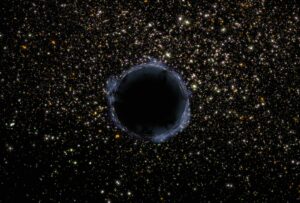
Black holes form when massive stars, such as those more than 20 solar masses, exhaust their nuclear fuel and collapse under gravity. I use the term “event horizon” to describe the boundary beyond which matter and light can’t escape. Gravity near this boundary becomes so intense that space and time distort, preventing objects like photons from returning.
Black holes fit into types based on mass and formation. Stellar-mass black holes originate from collapsed stars. Supermassive black holes, with masses exceeding millions of suns, occupy galactic centers, including Sagittarius A* in the Milky Way. Intermediate black holes, suggested by some X-ray observations, fill the mass gap between stellar and supermassive types.
I regard the singularity as the core, where density increases infinitely, and general relativity loses predictive power. Observations, like gravitational waves detected by LIGO in 2015, confirm black holes exist and interact, affecting surrounding matter. I recognize that, despite indirect detection, their influence extends to nearby stars and accretion disks, which emit X-rays as matter spirals inward.
Researchers continually update this understanding as new observations refine black hole models and expand knowledge of these extreme cosmic regions.
The Formation and Life Cycle of Black Holes
Black holes show a distinct life cycle shaped by their origin and cosmic environment. I see their journey start from catastrophic stellar collapse and extend through gradual growth and complex interactions.
Birth of a Black Hole
Black holes form when massive stars, usually above 20 times the mass of our sun, collapse at the end of their lives. Their cores contract once nuclear fusion stops, creating a region with gravity so strong that even light cannot escape. Physicists in the 1960s proved through general relativity that these extreme conditions produce singularities surrounded by event horizons. I note that early universe conditions, marked by turbulence and density, offered an environment where some black holes formed rapidly rather than through regular star cycles.
Growth and Evolution
Black holes grow when they absorb matter or merge with other black holes. Gas clouds, stars, and even smaller black holes contribute to their mass if they cross the event horizon. Observations show mergers produce bigger black holes and unleash gravitational waves detected by instruments like LIGO. Supermassive black holes, found in the centers of galaxies, likely formed from repeated mergers and large-scale accretion events. I recognize that these processes steadily increase a black hole’s size and influence in its host galaxy, as no known natural event destroys or reduces their mass in the observable cosmos.
Theoretical Ways Black Holes Could Be Destroyed
Some proposed mechanisms could eliminate black holes under unique physical constraints. I examine three scenarios that illustrate how destruction might occur in specific theoretical contexts.
Hawking Radiation and Black Hole Evaporation
Hawking radiation predicts black holes emit energy due to quantum effects near their event horizons. When particle-antiparticle pairs appear close to the horizon, one particle escapes, causing the black hole to lose a minuscule amount of mass. With this process, a black hole slowly evaporates until it vanishes, although the timescale for stellar-mass or larger black holes extends far beyond the current age of the universe. Only extremely small black holes, such as primordial ones possibly formed in the early universe, could evaporate within observable timescales.
Collision and Merger Scenarios
Collisions or mergers involving black holes usually create larger black holes and release gravitational waves. A few theoretical models propose that specific types of “regular” black holes, which lack a central singularity, could experience destruction of their event horizon under rare, unstable conditions. Though studies explore violations of classical black hole theorems in these setups, standard scenarios favor growth and stabilization rather than real destruction during any black hole interaction.
Effects of Surrounding Matter and Energy
Surrounding matter or energy commonly increases black hole size. Accreting gas clouds, stars, or cosmic background radiation expands their mass. Experiments and simulations find no efficient external mechanism that eliminates a black hole, aside from Hawking evaporation. These interactions consistently reinforce black holes’ persistence and growth in their cosmic environments.
Current Scientific Consensus on Black Hole Destruction
Current scientific consensus confirms that black holes can’t be destroyed by external impacts or collisions. Black holes only grow larger or merge when they interact, emitting energy as gravitational waves. No known event in the universe, including massive collisions or injections of matter, reverses or shrinks a black hole’s mass.
Theoretical work by Stephen Hawking introduced Hawking radiation in 1974, predicting that black holes slowly lose mass by emitting quantum radiation. This evaporation process means black holes eventually disappear, yet the timescale for stellar mass black holes is around (10^{64}) years, and for supermassive black holes it’s as long as (10^{106}) years. These durations exceed the current age of the universe by many orders of magnitude.
Recent theories propose that certain “regular” black holes, lacking singularities, might have event horizons that could be disrupted under very specific conditions. More rigorous analyses reveal that these black holes still resist destruction because of stability mechanisms rooted in fundamental physics.
Attempts to directly dismantle the event horizon would contradict established physical laws, which contemporary physics avoids. The only recognized route for black hole destruction remains quantum evaporation via Hawking radiation, a process far too slow to influence existing black holes in any observable timeframe.
Current debates also reference the black hole information paradox, an unsolved issue connecting black hole evaporation and quantum theory. This paradox highlights major questions surrounding information loss and the rules that govern extreme cosmic objects, maintaining black hole destruction as a key problem in modern theoretical physics.
Implications for the Universe
Destruction of black holes by Hawking radiation affects the universe over timescales far exceeding its current age. Dissipation of a solar-mass black hole, for example, takes about (10^{64}) years, returning mass-energy to the universe as background radiation. Supermassive black holes, examples like Sagittarius A* in the Milky Way, persist even longer.
Release of energy through these faint emissions gradually changes the distribution of matter and energy. Evaporating black holes transfer their contents back to space, altering the cosmic inventory of particles. Primordial black holes, if they exist, could evaporate rapidly enough to produce gamma-ray bursts, significantly influencing early-universe conditions. No conclusive detections of these bursts have occurred, but they remain a signature target in observational astrophysics.
Evolution of black holes by evaporation shapes long-term cosmological models. Absence of external mechanisms for rapid destruction implies black holes hold on to their mass and information for immense durations. Information paradox questions, sparked by Hawking’s predictions, drive research in quantum gravity, entanglement, and theories that connect black hole physics to fundamental properties of the universe.
Observation of these extreme processes enriches my understanding of how universal matter cycles, how entropy and information evolve, and how cosmic history unfolds over vast epochs. Study of black hole destruction ultimately reflects on the fate and structure of the cosmos.
Conclusion
Exploring whether black holes can truly be destroyed has deepened my appreciation for their role in the universe. These cosmic giants challenge the limits of what we know about physics and the nature of reality itself.
While theories like Hawking radiation offer a glimpse into their eventual fate, black holes remain some of the most persistent and enigmatic objects we’ve ever discovered. As our understanding of the cosmos evolves, so too will our insights into the ultimate destiny of black holes and the secrets they still hold.
Frequently Asked Questions
What is a black hole?
A black hole is a region in space with gravity so strong that not even light can escape from it. They form when massive stars collapse under their own gravity at the end of their life cycle.
How do black holes form?
Black holes are created when very massive stars (over 20 times the mass of the Sun) exhaust their fuel and collapse under gravity, creating an extremely dense point known as a singularity.
What types of black holes exist?
There are three main types: stellar-mass black holes (from collapsed stars), intermediate black holes (suggested by X-ray observations), and supermassive black holes (found at galactic centers).
Can black holes be destroyed?
Black holes cannot be destroyed by external forces or collisions. Theoretical destruction is possible through Hawking radiation, which would take far longer than the current age of the universe.
What is Hawking radiation?
Hawking radiation is a theoretical process by which black holes slowly emit energy and lose mass due to quantum effects near the event horizon, eventually leading to their evaporation over incredibly long timescales.
What is an event horizon?
The event horizon is the boundary around a black hole beyond which nothing, not even light, can escape due to extremely strong gravitational pull.
What happens at the singularity of a black hole?
The singularity is the core of a black hole, where gravity crushes matter to infinite density and current physics theories break down, making predictions impossible.
How are black holes detected?
Black holes are detected indirectly by observing their effects on nearby matter, such as stars or gas, and through gravitational waves created by black hole mergers, as observed by detectors like LIGO.
Can black holes merge or grow?
Yes, black holes can merge with others to form larger black holes and can also grow by absorbing surrounding matter or energy.
What would happen if a black hole evaporates?
If a black hole evaporates via Hawking radiation, it would slowly return its mass as radiation to the universe, but this process takes much longer than the age of the universe for most known black holes.
Is there evidence of black holes evaporating?
No direct evidence of black holes evaporating has been found, especially for large black holes, but if primordial black holes exist, their evaporation could produce detectable gamma-ray bursts.
Are black holes permanent objects in the universe?
For practical timescales, black holes are effectively permanent because any possible destruction mechanism (like Hawking radiation) operates over unimaginable timespans—far greater than the current age of the universe.
What is the black hole information paradox?
The black hole information paradox is a theoretical conflict about whether information that falls into a black hole is truly lost forever, challenging quantum mechanics and prompting ongoing research in physics.
What impact do black holes have on galaxies?
Supermassive black holes at galactic centers influence the movement of stars and matter, shaping galaxy evolution and playing a key role in regulating star formation and the structure of galaxies.
Why are black holes important for our understanding of the universe?
Studying black holes helps scientists explore the laws of physics under extreme conditions, advance our understanding of gravity, test quantum theories, and learn more about the evolution and fate of the universe.