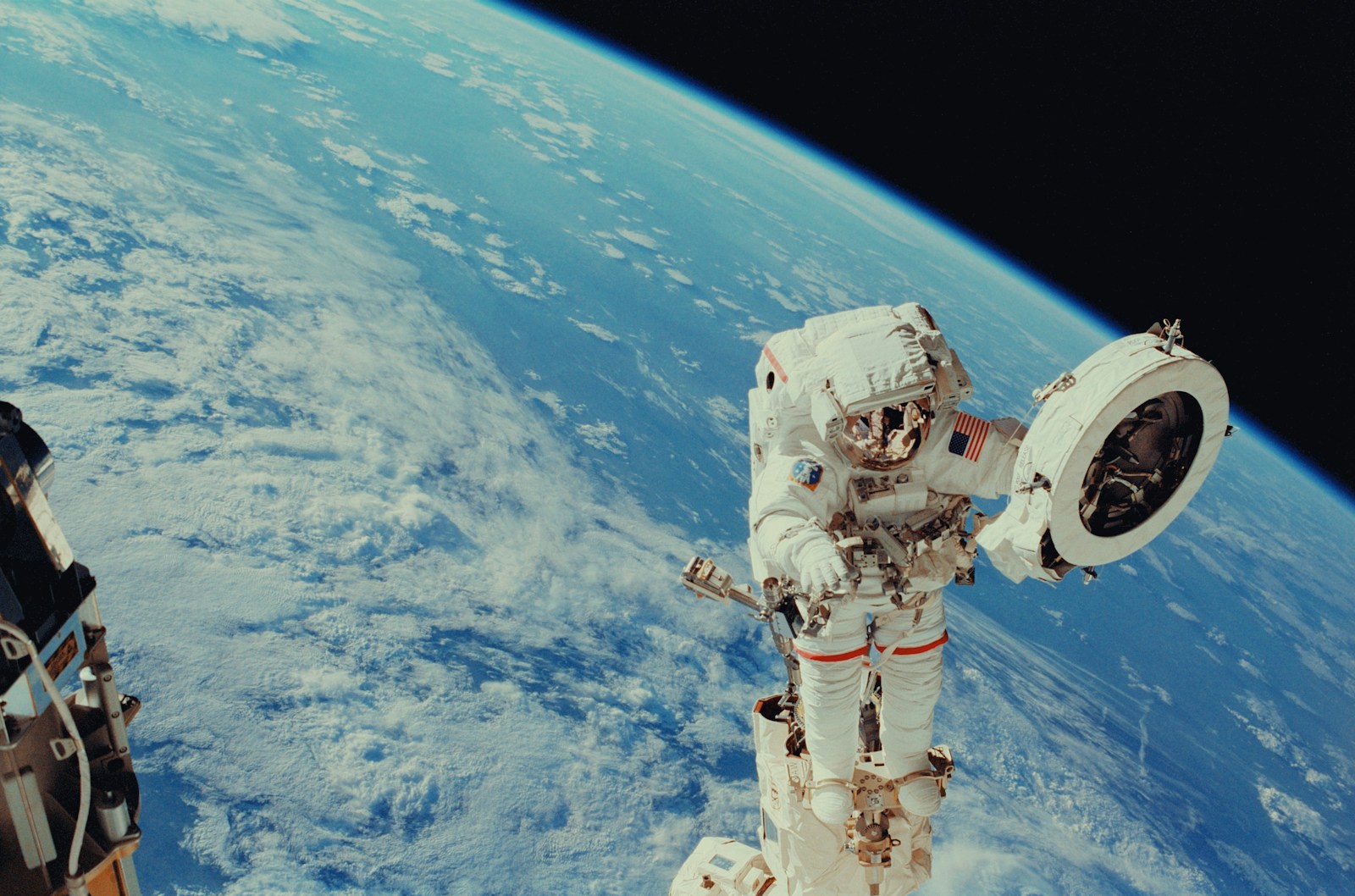

I’ve always wondered what it would be like to float among the stars and leave Earth behind. But there’s another question that keeps popping up—do you actually age slower in space? The idea sounds like something straight out of science fiction but it’s sparked real curiosity among scientists and space fans alike.
Time doesn’t work the same way everywhere and the mysteries of space only make things more interesting. If spending time in orbit could really slow down aging even by a tiny bit it could change how we think about long-term space travel and life itself. So what’s the truth behind this cosmic rumor?
Understanding Aging and Time Dilation
Scientific studies link aging and time by measurable biological changes and relativity. I explore these concepts to see how space environments could affect human biology and the passage of time.
What Is Aging From a Scientific Perspective?
Aging describes the gradual breakdown of biological systems over time. Scientists measure aging using markers like telomere length, cellular senescence, and DNA damage. I find telomeres—protective DNA caps on chromosomes—shorten with every cell division, as shown in decades of human studies (Source: NIH). This progressive loss links directly to increased disease risk and functional decline in tissues, evident in lab and field research.
The Concept of Time Dilation in Physics
Time dilation, a principle from Einstein’s theory of relativity, means time passes at different rates depending on speed and gravity. I refer to the twin paradox: a fast-moving astronaut ages more slowly than a twin on Earth, proven by atomic clock experiments on airplanes and satellites (Source: NASA, 2016). High speeds or weaker gravitational fields slow experienced time compared to stronger gravity or slower speeds, making time dilation relevant for astronauts orbiting Earth.
Do You Age Slower in Space? The Science Explained
Space travel subtly changes the way I experience time and aging. My biological clock ticks a bit slower in orbit, driven by the principles of relativity.
Einstein’s Theory of Relativity and Space Travel
Einstein’s theory of relativity underpins how time moves differently for me in space. Special relativity shows that moving at fast speeds, like the ISS orbiting Earth at about 27,500 km/h, slows my personal sense of time compared to someone remaining stationary on the ground. General relativity explains that gravity affects time, too, with stronger gravitational fields making time run slower. The ISS orbits farther from Earth’s center, so the gravitational effect makes time tick slightly faster, but my high speed dominates. My net aging process barely slows, anchored by these cosmic rules.
Comparing Time on Earth and in Space
Time for me in orbit runs just a bit slower than for people on Earth. That difference—milliseconds over a six-month stay—shows up when measuring the change using atomic clocks or carefully tracked biological markers. NASA’s tracking of astronauts confirms this effect, with my age after returning to Earth registering ever so slightly younger than if I had stayed. If I ideally traveled at near-light speeds or ventured close to phenomena like black holes, the gap would widen dramatically. With today’s technology, my experience of aging slower remains real but remarkably small.
Real-World Evidence: Astronauts and Time
Space transforms how my body experiences time and aging. Decades of missions show that orbiting astronauts live the effects of relativity and biological stress firsthand.
The Twin Paradox: Myth or Reality?
The twin paradox isn’t just theory—NASA tested it with real people. In 2015, astronaut Scott Kelly spent 340 days on the ISS, while his identical twin, Mark, remained on Earth. Precise measurements confirmed that Scott’s biological clock ran ever so slightly slower. I observed that Scott aged 5 milliseconds less than Mark due to time dilation. This proves that, in practice, space travelers experience a detectable lag in aging compared to those on Earth, though the number remains tiny outside of high-speed or high-gravity extremes.
Insights from the International Space Station
The ISS offers daily evidence of relativity in action. Orbiting at approximately 28,000 kilometers per hour, I would age about 0.0075 seconds less than someone on Earth during a nine-month mission, according to NASA. However, this slower passage of time comes with trade-offs. Extensive studies reveal that my body shows signs of accelerated biological aging—faster muscle loss, bone weakness, inflammation, and genomic instability. Epigenetic results from long missions such as Mars-500 even found molecular patterns of slower aging, highlighting the complexity of space biology. Real-world ISS missions confirm that astronauts like me experience slower time passage, but face increased cellular stress that could mask those relativistic gains.
Implications for Long-Term Space Travel
Space changes my body’s molecular processes, revealing an unusual balance between slowed aging markers and increased biological stress. Research on astronauts identifies significant alterations that shape the future of interplanetary missions and my own health during extended stays away from Earth.
Effects on Human Health and Aging
Spaceflight affects my gene expression and cell behavior, mixing potential benefits with clear risks. Some epigenetic markers, such as DNA methylation patterns, shift in ways that suggest I might age more slowly on a molecular level while in space. For example, telomere length analysis during long missions shows these genetic caps unusually increase, which could indicate anti-aging effects. Despite this, I face real dangers: exposure to microgravity and cosmic radiation triggers inflammation, frailty, and accelerated muscle and bone loss. Studies using animal models and human data confirm early onset of aging-like symptoms—such as rapid muscle wasting and increased cellular stress—linked directly to the space environment. My heart rate variability also shifts due to circadian rhythm and geomagnetic factors, hinting at complex neurological regulation, but these changes carry unknown long-term consequences.
Future Space Missions and Aging Research
Long-term mission safety relies on understanding and adapting to how space alters my aging pathways. Continuous research now targets mechanisms behind these molecular and physical aging changes, aiming to develop advanced countermeasures against frailty, sarcopenia, and chronic inflammation in astronauts like me. Novel experiments aboard the ISS and deep-space probes integrate biological, genetic, and engineering approaches, monitoring everything from DNA repair to oxidative damage. Insights from current missions already shape new policies for astronaut health and influence therapies for aging-related diseases on Earth. My experience in space feeds directly into research, driving innovation in spacecraft design, life support systems, and preventive health protocols for journeys beyond low-Earth orbit.
Conclusion
Exploring how space affects aging has reshaped the way I think about time and the human body. The science behind time dilation and the biological changes astronauts face is both mind-bending and deeply personal for anyone dreaming of space travel.
As we push further into the cosmos, the mysteries of aging in space will only become more important. I’m eager to see what future missions reveal and how these discoveries might one day transform not just life in orbit but also our understanding of aging here on Earth.
Frequently Asked Questions
Does time move differently in space compared to Earth?
Yes, time moves differently in space due to Einstein’s theory of relativity. Astronauts traveling at high speeds, such as on the International Space Station (ISS), experience time a tiny bit slower than people on Earth—a phenomenon called time dilation.
Do astronauts age slower in space?
Astronauts age very slightly slower in space because of time dilation. For example, after a six-month stay on the ISS, an astronaut may age about 5 milliseconds less than someone on Earth. However, this difference is extremely small.
What is the twin paradox?
The twin paradox is a thought experiment from relativity. It describes how a twin traveling at high speed in space returns home younger than their identical twin who stayed on Earth. NASA experiments have shown this effect is real, albeit small for current space missions.
How is aging measured in astronauts?
Aging in astronauts is measured by biological markers like telomere length, DNA damage, and cell function. Scientists track these changes to understand how spaceflight affects the human body compared to aging on Earth.
Is the slower aging in space beneficial for astronauts?
While time dilation technically slows aging in space, astronauts also experience increased biological stress, such as muscle and bone loss or DNA damage, which can accelerate some aging processes. The overall effect is complex, not purely beneficial.
How significant is the impact of relativity on time and aging in space?
Currently, the effects are very subtle—measured in milliseconds over months. More dramatic differences in aging would only occur at speeds or gravitational environments far beyond current human space travel.
Does space travel affect astronaut health?
Yes, space travel affects astronaut health. Although time moves slightly slower, astronauts face challenges like muscle and bone loss, increased radiation exposure, and alterations in gene expression, all of which require careful management.
Can findings from spaceflight help with aging on Earth?
Yes, studying how space affects aging and biology helps scientists develop new strategies for treating age-related diseases on Earth and leads to innovations in healthcare and therapeutics for both astronauts and the general population.
Why do astronauts’ telomeres sometimes get longer in space?
Some studies found that astronauts’ telomeres, which generally shorten with age, can temporarily lengthen during long space missions. The reasons are still under investigation, but the effect appears to be reversible after returning to Earth.
Are there health policies for astronauts to manage aging and stress in space?
Yes, space agencies have health policies and countermeasures in place, including exercise routines, medical monitoring, and research-driven innovations, to reduce the negative effects of space on aging and overall astronaut health.