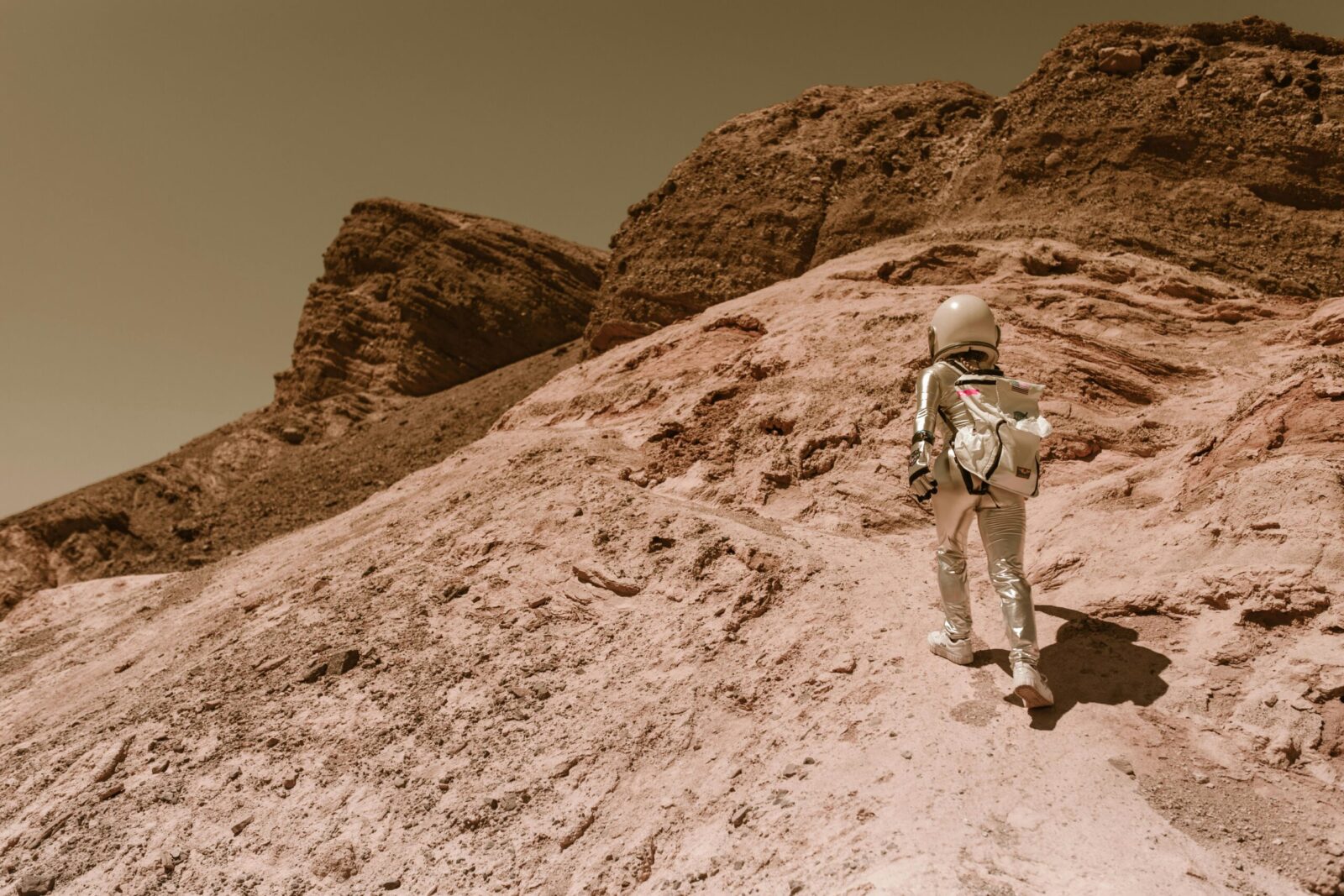

Dreaming of exploring Mars feels like the ultimate adventure. But as I imagine setting foot on the Red Planet the reality hits—traveling to Mars comes with risks we can’t ignore. Every step of the journey brings new challenges that test our technology and our limits.
From cosmic radiation to the psychological strain of isolation these threats aren’t just science fiction. They’re real hurdles that could make or break any mission. Understanding the main dangers helps us prepare for the unknown and brings us one step closer to making our Mars dreams a reality.
Understanding the Main Threats of Mars Mission
I examine the main threats of a Mars mission by focusing on operational risks, environmental hazards, and crew health challenges. Each factor connects directly to the Mars environment and mission logistics.
Cosmic radiation exposure remains the top threat during long-duration Mars missions. Galactic cosmic rays and solar particle events, both intense beyond Earth’s protective atmosphere, raise cancer and acute radiation sickness risks. NASA data shows Mars-bound astronauts could receive up to 600 millisieverts (mSv) of radiation in one round trip, more than double the yearly dose for a nuclear worker on Earth.
Microgravity effects cause muscle atrophy, bone demineralization, and fluid redistribution. Studies from the ISS confirm astronauts can lose up to 1–2% of bone mass per month in microgravity, increasing fracture risk. The low-gravity environment on Mars at 0.38g only partially mitigates these effects, so prolonged missions see cumulative impacts.
Psychological stress from isolation, confinement, and distance from Earth poses another significant risk. Key examples include mood swings, impaired cognitive performance, and social tensions documented in the Mars500 and HI-SEAS analog studies, which demonstrated crew performance and well-being drops over time in enclosed environments.
Life support system reliability directly impacts crew survival. A closed-loop ecosystem for air, water, and food, exposed to Martian dust contamination and technical failures, could threaten mission outcomes. Redundant designs and autonomous repair capabilities limit but don’t eliminate this risk.
Surface hazards on Mars, such as toxic perchlorates, intense dust storms, and extreme temperature swings from -125°C to 20°C, further complicate extravehicular activities and habitat safety. These elements increase equipment wear and can trigger emergencies if mitigation planning falls short.
Every main threat of a Mars mission interrelates with the spacecraft environment, crew dynamics, and Mars surface conditions, requiring integrated countermeasures.
Radiation Exposure Risks
Radiation exposure remains the top health threat on Mars missions, with astronauts leaving the protection of Earth’s magnetosphere and facing much higher levels of cosmic and solar radiation. I see the radiation dose during a Mars trip reaching about 60% of my lifetime Earth exposure, which greatly exceeds levels recorded even on the ISS.
Long-Term Health Impacts
Long-term health impacts of Mars radiation exposure include acute radiation sickness, greatly elevated cancer risks, genetic mutations, and possible neurocognitive changes. I experience cumulative doses between 300 and 450 mGy during multi-year Mars missions, a significant increase compared to the lower exposures in Earth orbit. This level of exposure increases my vulnerability to developing cancer and may harm my central nervous system, with documented links to cognitive decline and other chronic health disorders in similar high-exposure environments.
Current Mitigation Strategies
Current mitigation strategies for Mars radiation focus on minimizing exposure using multiple approaches. I rely on spacecraft shielding designed to block high-energy particles and carefully track my cumulative dose as a baseline, similar to systems already operating aboard the ISS. Habitat shielding on Mars includes additional protective materials, but galactic cosmic rays remain difficult to block due to their high penetration abilities. I follow ALARA (As-Low-As-Reasonably-Achievable) guidelines, combining advanced engineering, real-time monitoring, and optimized operational planning to reduce radiation exposure as much as possible on every Mars mission.
Psychological and Social Challenges
Psychological and social factors on a Mars mission introduce constant risks to individual well-being and group cohesion. I recognize that stress from separation, extreme confinement, and Earth-remoteness creates complex challenges throughout every phase of the mission.
Effects of Isolation and Confinement
Isolation and confinement during interplanetary travel create negative effects on mind and body. I see that astronauts in long-duration missions experience disturbed sleep cycles, mild to moderate depressive symptoms, cognitive decline, and exhaustion, as reported in the Mars500 simulation. Extended separation from family and Earth often leads to homesickness and reduced morale. The stress of confinement sometimes produces “displacement,” where crew members misdirect frustration toward each other or mission control, hurting trust and harming problem solving. Emotional resilience and mental health support become essential when physical contact with home is impossible.
Team Dynamics and Conflict Management
Team dynamics and conflict management remain vital for Mars mission success as psychological stress can amplify minor issues into serious disputes. I note that interpersonal tensions spike during mission-critical events like Mars surface operations. Studies highlight that conflicts occur more frequently with mission control than within the crew itself. Social isolation can result from team communication centralizing around some members, leaving others outside the group’s core, increasing risk for disputes. Managing these risks involves monitoring team health, supporting open communication, and addressing small issues before escalation. Virtual reality technology and communication systems can support morale and buffer some negative effects of extreme distance from Earth.
Technical and Mechanical Failures
Technical and mechanical failures always pose serious risks during a Mars mission. Even robust spacecraft designs can’t eliminate unknown failure modes, making mission reliability a constant challenge.
Life Support System Vulnerabilities
Life support system vulnerabilities remain a critical concern when supporting human life for several years in Mars’ hostile environment. Any component failure can put the crew in danger since the systems must regulate air, water, food, and waste efficiently and autonomously. Space radiation, absence of gravity, and limited resources add extra physiological stress, making system resilience even more important. During solar conjunctions, when communication is lost for up to two weeks, crews must resolve life support issues on their own, without timely help from Earth.
Communication Delays and Recovery Plans
Communication delays and recovery plans shape emergency response on Mars missions. A signal takes 4 to 24 minutes one-way between Mars and Earth, with round-trip delays exceeding 40 minutes. Critical decisions can’t wait for ground control. During solar conjunctions, a near-total blackout isolates the crew for about two weeks, so I’d count on pre-scripted contingency procedures and real-time autonomous systems to handle unexpected problems. These constraints demand robust onboard problem-solving and advanced training to maintain crew safety.
Environmental Hazards on Mars
Mars presents an array of environmental hazards that impact crew safety and mission operations. Toxic dust, radiation, surface challenges, and the threat of unknown life forms shape every aspect of mission planning and risk management.
Dust Storms and Surface Conditions
Mars surface conditions create persistent hazards for hardware and crew. Global dust storms, capable of engulfing the entire planet for weeks, reduce visibility and hinder solar power generation. Mars dust—comprised of iron oxide, silica, gypsum, chromium, and arsenic—clings electrostatically to suits, tools, and machinery. Abrasive grains damage equipment, constrain airlock sealing, and contaminate life support systems. A persistent 38% Earth gravity environment also influences muscle atrophy and bone density loss, with unknown long-term effects. Airborne toxins in the dust elevate respiratory risks, with inhalation causing lung irritation, inflammation, and in severe cases, irreversible lung diseases.
Unknown Biological Threats
Unknown biological threats complicate Mars mission biosecurity. Although no confirmed indigenous life exists on Mars, hypothetical Martian microbes can’t be dismissed. Biohazard risks emerge if Earth-origin contaminants interact with potential Martian organisms, possibly creating unexpected pathogens. Strict controls mitigate cross-contamination risks, but uncertainty remains due to incomplete knowledge of Mars’ biological environment. Managing microbial transfer, both to and from Earth, is vital for astronaut health and planetary protection protocols.
Conclusion
Mars missions demand more than just advanced technology and courage. As I look at the risks that await on the Red Planet, it’s clear that success relies on constant innovation, teamwork, and adaptability.
Each threat—whether it’s radiation, isolation, or technical failure—reminds me that exploration comes with real stakes. Only by anticipating these dangers and embracing new solutions can we hope to push the boundaries of human space travel safely.
Frequently Asked Questions
What are the main dangers of traveling to Mars?
The main dangers of traveling to Mars include exposure to cosmic radiation, health issues from microgravity, psychological effects from isolation, technical failures of life support systems, and environmental risks like toxic dust and extreme temperatures on Mars.
Why is cosmic radiation considered the biggest threat on a Mars mission?
Cosmic radiation is the top threat because astronauts can receive up to 600 mSv of exposure during a Mars round trip. This significantly increases risks of cancer, genetic mutations, acute radiation sickness, and neurocognitive changes.
How does microgravity affect astronauts’ health?
Microgravity leads to muscle atrophy and bone demineralization, making astronauts more prone to injuries and long-term health problems upon return to normal gravity.
What psychological challenges do Mars astronauts face?
Isolation, confinement, and long separation from Earth can cause depression, cognitive decline, sleep disturbances, and interpersonal conflicts, all of which could impact mission success.
How reliable are life support systems for a Mars mission?
Life support systems must operate autonomously and are critically important. Any technical failure could endanger the crew, especially during periods when communication with Earth is delayed or impossible.
What environmental hazards exist on the Martian surface?
Mars has toxic dust containing perchlorates, severe temperature swings, global dust storms that hinder visibility, and potential unknown biological threats, all complicating mission safety.
How are radiation risks mitigated during Mars missions?
Mitigation strategies include spacecraft and habitat shielding, following ALARA (As-Low-As-Reasonably-Achievable) guidelines, and limiting time spent in high-radiation environments.
What happens during communication blackouts with Earth?
During solar conjunctions, communication between Mars and Earth can be cut for up to two weeks. Crews must rely on autonomous systems and pre-scripted contingency procedures to handle emergencies.
How do astronauts cope with the stress of isolation on Mars?
Strategies include team health monitoring, open communication, conflict management training, and using virtual reality technology to simulate familiar environments and encourage relaxation.
Are there any risks from potential Martian microbes?
While no Martian microbes have been found so far, biosecurity measures are in place to prevent contamination. Unknown life forms could interact with Earth microbes, posing unforeseen health risks.
