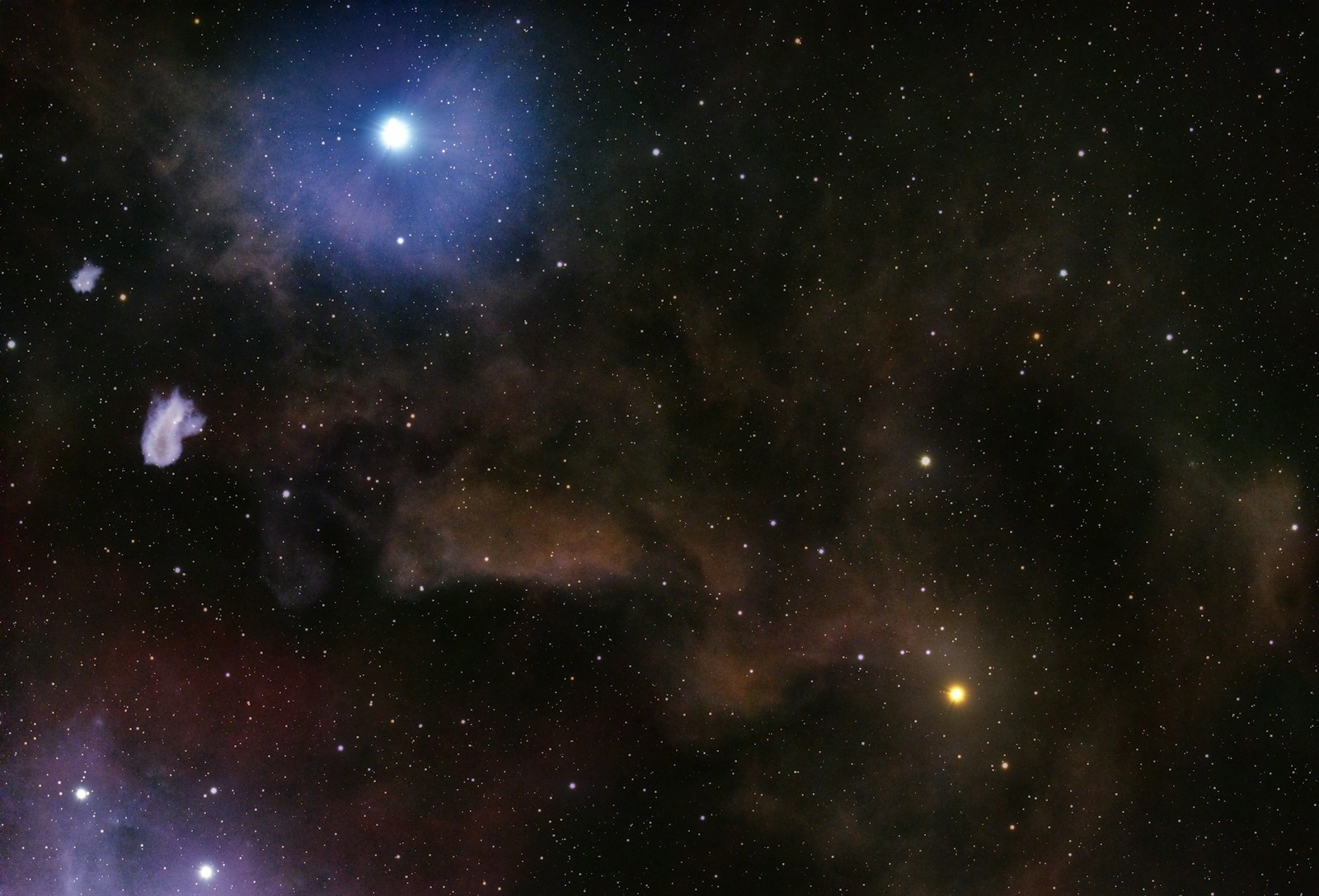

When I look up at the night sky I can’t help but notice that stars aren’t all the same color. Some shine with a cool blue glow while others sparkle in shades of red or gold. It’s a detail that’s easy to miss unless you really pay attention but once you see it you can’t unsee it.
I’ve always wondered what causes these dazzling differences. Are stars just painted by the universe in random hues or is there a science behind their colors? Exploring why stars come in so many shades opens up a fascinating story about the universe and the secrets hidden in starlight.
Understanding Why Stars Are Different Colors
Stars appear in different colors due to their surface temperatures. Hotter stars emit blue or white light, with temperatures above 10,000 Kelvin, like Rigel or Vega. Cooler stars emit red or orange light, staying below 3,500 Kelvin, as seen in stars such as Betelgeuse or Antares. Mid-temperature stars glow yellow or gold, averaging around 5,500 Kelvin, like our Sun.
Chemical composition also influences star color, as elements in a star’s outer layers absorb and emit specific wavelengths. Stars rich in hydrogen or helium, for example, display colors with slight variations due to these absorption lines.
Age and mass connect to star color because they determine a star’s lifecycle stage. Young, massive stars burn hot and appear blue or white. Older, less massive stars cool down and glow red or orange. Astronomers use star colors to determine stellar age, temperature, and chemical makeup, revealing critical details about a star’s evolution and the nature of our galaxy.
The Science Behind Star Colors
Star colors directly reveal the physical conditions on their surfaces. I notice changes in spectrum and hue based on measurable properties like temperature and chemical makeup.
Temperature and Color Spectrum
Surface temperature sets the color of starlight. Hotter stars, such as those above 10,000 kelvins, appear blue or white because they emit most light at short wavelengths. For example, Rigel burns at about 12,000 kelvins and shows a bright blue-white color. Cooler stars, with surface temperatures around 3,000 to 4,000 kelvins, glow red or orange; Betelgeuse, at about 3,700 kelvins, looks distinctly red-orange. The Sun, a mid-temperature star at roughly 5,700 kelvins, has a yellow-white color. Black body radiation describes this shift—color moves from red to blue as temperature increases.
Chemical Composition of Stars
Stellar color also depends on atmospheric chemistry. Different elements absorb and emit specific wavelengths, imprinting lines across the visible spectrum. Hydrogen, helium, calcium, and other elements cause variations in the overall light that reaches me on Earth. For instance, a star rich in certain metals will show deeper absorption lines and subtly altered colors compared to a star with a pure hydrogen-helium atmosphere. Astronomers read these spectral signatures to infer both physical and chemical properties, adding precision to star classification.
Factors Influencing Star Color Perception
Perceiving star color depends on factors beyond temperature and composition. Distance, atmospheric conditions and individual eye sensitivity create distinct variations in how I see star colors from Earth.
Distance and Atmospheric Effects
Distance and Earth’s atmosphere shape my view of star color. Starlight passing through space and the atmosphere loses some wavelengths through scattering and absorption. When stars lie near the horizon, atmospheric layers scatter blue light more than red, making stars appear redder. The Doppler Effect shifts star light if a star moves toward or away from me, causing subtle blue or red shifts in color. Interstellar dust between me and a star can absorb certain wavelengths, altering perceived hues before light even reaches Earth’s atmosphere.
Human Eye Sensitivity
My eye’s sensitivity to light wavelengths also changes star color perception. The human eye detects brightness more efficiently than color under low light, making faint stars appear white even if their actual color leans blue or red. Individual differences in cone cell sensitivity can cause me to see star hues differently from someone else. Ambient city lighting and atmospheric aerosols may further impact my ability to distinguish specific colors among fainter stars.
What Star Colors Indicate About Their Life Cycle
Star colors offer insight into their temperature, mass, and stage within the life cycle. Observing a star’s hue reveals how rapidly it’s burning fuel and what phase it’s currently experiencing.
Young vs. Old Stars
Young stars with high mass appear blue or white since they’re extremely hot, reaching temperatures up to about 40,000°C. These stars, like Rigel and Vega, burn hydrogen rapidly and shine intensely for only a few million years. As stars age, they cool and expand, shifting their color toward yellow, orange, or red. Red giants and supergiants, such as Betelgeuse and Antares, mark later phases when the star’s surface temperature drops and the outer layers swell. Smaller stars, like the Sun, stay yellow during their main phase, with a surface temperature near 5,700 K, then transition to red giants before ending as faint white dwarfs.
The Role of Stellar Evolution
A star’s color tracks its evolutionary changes as it ages and depletes fuel. Mass determines the rate of hydrogen consumption, with massive stars evolving quickly and ending in explosive supernovae. As hydrogen diminishes, stars expand and cool, which shifts their surface color to longer, redder wavelengths. The faint red glow of aging stars indicates lower temperature and reduced energy output, while blue or white hues suggest hot, rapidly burning stellar youth. By understanding color shifts, I can map a star’s journey from youthful brilliance through final fading.
Notable Examples of Colorful Stars in the Night Sky
Vega stands out in the constellation Lyra as one of the brightest blue-white stars. I see its blue-white hue indicating a high surface temperature, about 9,600 K. Rigel, in Orion, also glows blue-white with an even higher surface temperature that reaches around 12,100 K. Both stars are much hotter than the Sun and their colors confirm intense energy output.
Betelgeuse, a red supergiant in Orion, catches my eye because of its deep red-orange color. Its surface temperature sits at about 3,700 K, making it significantly cooler than blue stars. Antares in Scorpius offers a similar example of a red supergiant with a pronounced reddish glow, reflecting comparable surface conditions.
The Sun represents a yellow-white star, its spectrum peaking around 5,700 K. Although it’s less visually dramatic against the night sky, the Sun’s color typifies G-type main sequence stars and reflects a moderate surface temperature. Capella, in Auriga, appears yellow as well, with two giant stars in the system both showing temperatures around 5,900 K.
The Pleiades, or Seven Sisters, in Taurus showcases mostly blue stars. I view these B-type stars as very young and hot, their intense blue color highlighting their high surface temperatures and brief lifespans.
Sirius, in Canis Major, shines as the brightest night sky star. Its blue-white color comes from a 9,940 K surface, positioning it firmly among the hotter, more massive main sequence stars.
Conclusion
When I look up at the night sky I see a vibrant tapestry of colors that tells a deeper story about the universe. Each star’s unique hue reveals clues about its temperature life stage and chemical makeup.
The next time I spot a blue star or a glowing red giant I’ll remember that these colors aren’t just for show—they’re cosmic signatures shaped by physics and time. It’s a reminder that even the smallest points of light hold fascinating secrets waiting to be discovered.
Frequently Asked Questions
Why do stars appear in different colors?
Stars appear in different colors mainly due to their surface temperatures. Hotter stars emit blue or white light, while cooler stars glow red or orange. Chemical composition and other factors also influence a star’s color.
What does a star’s color tell us about its temperature?
A star’s color directly relates to its surface temperature. Blue or white stars are hotter (above 10,000 K), yellow stars like the Sun are moderate (about 5,700 K), and red or orange stars are cooler (3,000–4,000 K).
How does a star’s chemical composition affect its color?
The chemical elements in a star’s outer layers absorb and emit certain wavelengths of light. This can subtly change a star’s color and also produces unique spectral lines for astronomers to study.
Can distance or atmosphere change the way we see star colors?
Yes. Earth’s atmosphere scatters and absorbs certain wavelengths, making stars near the horizon look redder. Dust in space and city lights can also alter how we perceive a star’s color.
Why do faint stars often look white to the naked eye?
Under low light, our eyes are less sensitive to color, causing faint stars to appear white or grayish. Individual differences in eye sensitivity can also affect color perception.
What do star colors reveal about a star’s lifecycle?
A star’s color can show its age and mass. Blue-white stars are young and massive, burning hotter and faster. Red or orange stars are generally older, cooler, and in later evolutionary stages.
Which are some well-known colorful stars?
Notable examples include blue-white Vega and Rigel, red supergiants Betelgeuse and Antares, our yellow-white Sun, and Sirius, the brightest star, which is blue-white.
Can a star’s movement change its color from Earth?
Yes, due to the Doppler Effect, a star moving toward us appears slightly blue-shifted, while one moving away appears red-shifted. The effect is usually subtle for distant stars.
Does interstellar dust affect star colors?
Interstellar dust can absorb and scatter starlight, sometimes making stars appear redder than they actually are. This is known as interstellar reddening.
Why do some stars look different in color through a telescope or camera?
Telescopes and cameras can collect more light than the naked eye, increasing color contrast and revealing hues that may not be visible unaided. They may also capture details at different wavelengths.