
When I look up at the night sky I can’t help but wonder what it would be like to hear the stars. Space seems so full of action with exploding stars swirling galaxies and mysterious signals from distant worlds. But is it possible for sound to travel through the vast emptiness between those stars?
I’ve always been fascinated by the science behind what we can and can’t hear beyond our planet. The idea of sound in space pops up in movies and books all the time but how much of it is real? Let’s dive into what really happens to sound when it leaves Earth and heads out into the cosmos.
Understanding Sound and Its Requirements
Sound exists as a form of energy produced by vibrating objects. I notice that many people associate sound with music, speech, and environmental noises on Earth, though these examples all share physical requirements. I’ll break down the basics of sound and its travel methods.
What Is Sound?
Sound means vibrations that travel through a medium like air, liquid, or solid. I observe that sound waves carry energy away from the source, causing particles in the medium to oscillate. Auditory experience depends on these vibrations reaching human ears or detection devices. Without a medium, the oscillations can’t form sound waves.
How Does Sound Travel?
Sound moves by making particles in a medium compress and rarefy in a chain reaction. I see that denser materials, such as metal, let sound move faster, while less dense gases, like air, slow it down. For example, I can hear voices through a wall due to vibrations transferring through solid material, but I can’t hear them in a vacuum. In a vacuum, with no particles available, sound propagation doesn’t occur. So, sound’s movement depends entirely on the presence of matter.
The Nature of Space
Space creates an environment nearly devoid of matter, making it different from anything I experience on Earth. Sound’s behavior changes drastically where the density of particles drops almost to zero.
The Vacuum of Space
The vacuum of space prevents sound from propagating since there’s no medium of interconnected particles to vibrate. I find that while space isn’t a perfect vacuum, particle density averages at just a few atoms per cubic centimeter, nowhere near enough to carry mechanical sound waves. Any remaining particles—like sparse gas, plasma, or cosmic dust—don’t form a continuous medium, so sound energy can’t transfer in a meaningful way.
Comparison to Earth’s Atmosphere
Earth’s atmosphere, with its dense layer of air molecules, enables sounds to travel as vibrations. Sounds reach me on Earth because molecules are packed closely, allowing the rapid transfer of energy. In contrast, the near-emptiness of space offers no such network of particles, so when sounds on Earth move at 1,223 kilometers per hour, nothing comparable happens in space. The sharp difference in medium explains why even loud events, such as astronomical explosions, don’t carry an audible sound outside a planetary atmosphere.
Can Sound Travel Through Space?
Sound can’t travel through space because sound needs a medium like air, water, or solid matter to move. In the vacuum of space, there’s no network of particles to vibrate, making space almost completely silent.
Scientific Explanation
Sound is a mechanical wave, relying on the movement of particles to transmit energy. I observe that on Earth, sounds move as vibrations through air particles, passing from one to the next. In space, almost no particles are present, so these vibrations stop—they can’t jump between atoms or molecules that aren’t there. For instance, even catastrophic events like supernovae remain silent without a medium to carry the pressure waves. The phrase “In space, no one can hear you scream” from Alien highlights this scientific fact.
Common Misconceptions
Many believe sound can travel through space because light does, but light differs as it’s an electromagnetic wave that moves without any medium. I notice some confusion arises from depictions in movies and books, where battles feature loud explosions in a vacuum. Recent studies describe sound-like vibrations tunneling across microscopic vacuum gaps with electromagnetic effects, but this doesn’t mean actual sound travels through open space on any meaningful scale. I don’t find echoes or noise in space as sound waves have no particles to move through.
Communication in Space
Communication in space uses methods that bypass the need for air or other mediums. I rely on electromagnetic waves, which can move through the vacuum of space and provide reliable contact over vast distances.
How Astronauts Communicate
Astronauts on spacewalks use radios built into their suits to communicate. My voice becomes an electrical signal inside the helmet, which converts it into radio waves. These waves travel directly through space, connecting me with other astronauts and Mission Control. NASA’s Space Communications and Navigation (SCaN) program uses transmitters and receivers to encode and decode voice and data using these radio signals. This system provides clear audio regardless of the nearly empty environment outside the spacecraft. I can also use equipment like the HAM radio on the International Space Station for amateur radio contacts with people on Earth, relying on the same electromagnetic principle.
Alternative Methods for Transmitting Information
Only electromagnetic waves deliver information in open space, since sound cannot travel there. I use light waves for some types of data transmission, including laser-based communication systems. These lasers send encoded signals quickly across the vacuum. My spacecraft also relies on digital signals packed into radio or microwave frequencies. Technologies adapt traditional earthbound wireless principles for long-range, low-interference operation in the space environment. Any successful method always employs forms of electromagnetic radiation to guarantee transmission without a material medium.
Real-World Examples and Experiments
Researchers have tested sound’s limitations in vacuum environments and explored creative ways to represent space waves as sound. These experiments show where conventional sound ends and scientific innovation begins.
Historical Scientific Experiments
Scientists demonstrated sound’s need for a medium in the 19th and 20th centuries using evacuated glass containers. I studied experiments where sound intensity dropped sharply as air was pumped out, proving sound couldn’t pass through a vacuum. Researchers like Thomas Young investigated how electromagnetic waves (such as light) moved through space with no medium, while confirming that mechanical sound waves—unlike light—remained silent in vacuums. These historical tests established that sound waves, unlike electromagnetic radiation, need interconnected particles to propagate, which space lacks.
Visualizing Waves Without Sound
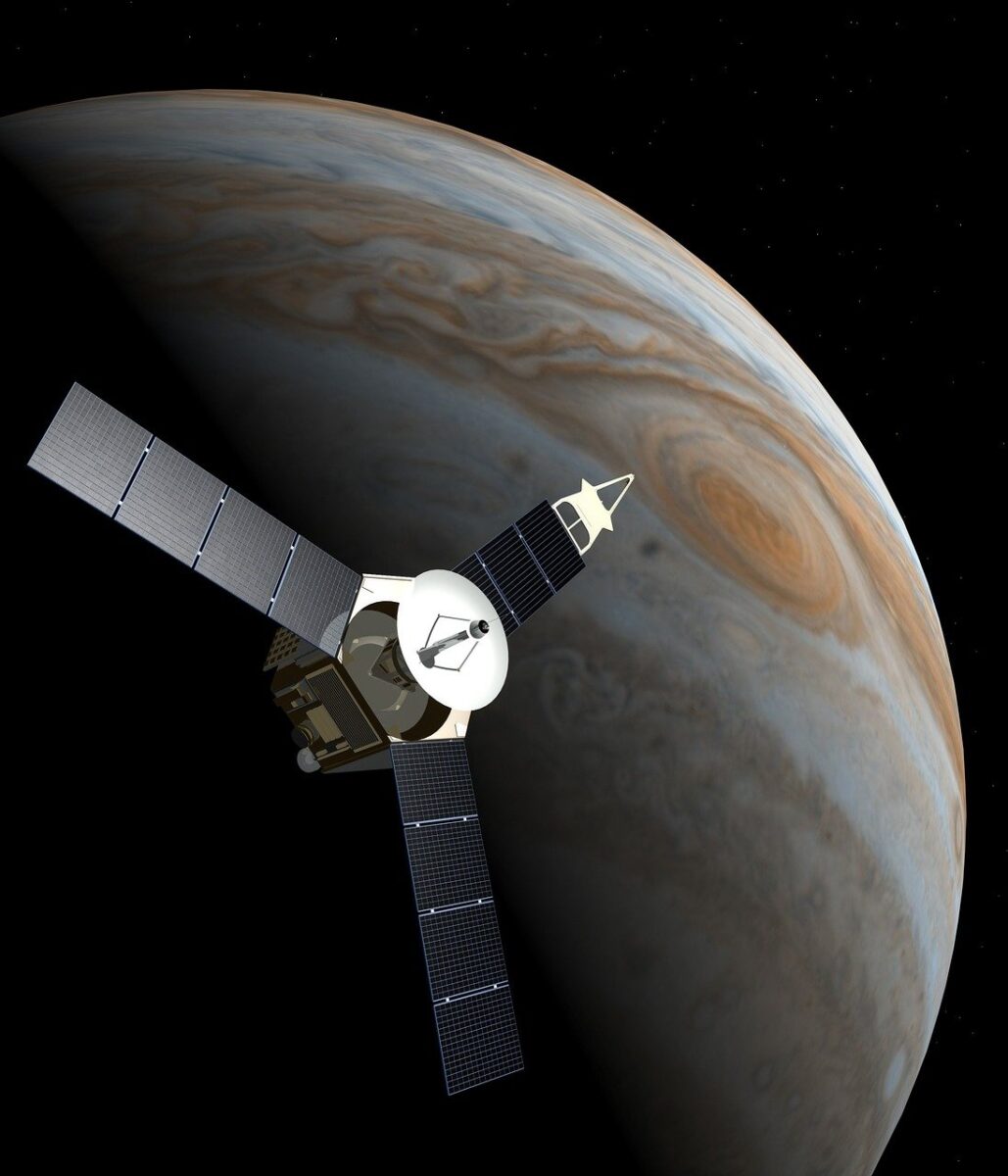
Modern scientists found ways to experience “waves” in space despite the silence. I’ve seen projects where NASA translated pressure waves in hot gas around black holes into audible sound using sonification—a process creating sound from non-audible data. The Voyager spacecraft measured plasma waves in space, which scientists converted into sound signals so researchers could “hear” changes in solar wind and space environments. While these aren’t traditional sound waves, sonification turns physical or electromagnetic phenomena into forms I can perceive as sound data, expanding my understanding of vibrations in the void.
Conclusion
Looking up at the stars always fills me with wonder about what’s happening out there. Even though the universe is full of incredible events, true silence reigns between the stars. My curiosity about hearing the cosmos led me to explore the science, and I now appreciate just how unique Earth’s noisy atmosphere really is.
Space may be silent, but technology lets us stay connected and even experience cosmic phenomena in new ways. I’m excited to keep learning about the universe—both its mysteries and the quiet that makes it so fascinating.
Frequently Asked Questions
Can you hear sounds in space like you do on Earth?
No, you cannot hear sounds in space as you do on Earth. Space is a near-perfect vacuum, meaning it lacks the air or other materials needed for sound waves to travel. Without a medium, sound cannot move, making space almost completely silent.
Why do movies and books show sounds in space?
Movies and books often include sound effects in space for dramatic effect and storytelling. In reality, these sounds are not scientifically accurate, as true space is silent due to the lack of a medium for sound waves.
How does sound travel on Earth?
Sound travels on Earth by vibrating particles in a medium such as air, water, or solids. These vibrations move as mechanical waves, transferring energy from the source to our ears. The presence of matter is essential for sound to propagate.
Is space completely empty?
Space is not entirely empty, but it has an extremely low density—just a few atoms per cubic centimeter. This lack of particles means there is not enough material for sound waves to be transmitted, resulting in the silence of space.
How do astronauts communicate in space if sound can’t travel?
Astronauts use radio waves to communicate, which are electromagnetic waves. Their voices are converted into electrical signals and then sent as radio waves between their suits and Mission Control, allowing for clear communication in the vacuum of space.
Can any kind of sound travel through a vacuum?
No, traditional sound waves cannot travel through a vacuum because they need a physical medium to move through. Only energy forms like light or radio waves, which do not require matter, can travel across the emptiness of space.
Have scientists ever “heard” anything from space?
Scientists cannot hear natural sounds in space, but they can translate space data (like pressure or plasma waves) into sound using a process called sonification. These representations help us “listen” to space events, even though they are not sounds in the traditional sense.
Why do we say “In space, no one can hear you scream”?
This phrase highlights the scientific fact that, without a medium like air, sound cannot travel. Even the loudest sounds would go completely unheard in the vacuum of space, underscoring its eerie silence.
Can sound travel faster or slower depending on the medium?
Yes, sound speed depends on the density and nature of the medium. It generally travels fastest through solids, slower through liquids, and slowest through gases like air. However, in the vacuum of space, sound cannot travel at all.
Do any modern technologies use sound in space?
No current technologies use actual sound waves to communicate in space. All space communication relies on forms of electromagnetic radiation, such as radio waves, microwaves, or lasers, to send information over vast distances without needing a medium.